When a newly planted shrub dies in Ibiza, it is rarely the plant's fault. It is what lies underneath. Choosing the right species is half the job, and in our guide to wind-resistant gardens we covered the plants that cope with the easterly wind and the salt. The other half is preparing the soil before planting, and that is the step almost everyone skips.
At ServiJuanito we have been planting and maintaining gardens across the island since 2003, and the most common failure we see does not happen at the nursery: it happens in the planting hole. Plants that cost a small fortune dry out in their first August because nobody prepared the ground in November. This guide sets out, in order, the five steps we apply on every planting job so the roots leave the root ball and take hold in the soil within a single winter.
What Ibiza's soil is like and why it matters before you plant
Almost the whole island sits on limestone. That gives a calcareous soil with a lot of stone, little organic matter and a high pH, in which acid-loving species will not thrive no matter how much you feed them. Across large parts of the interior and the south there is also red clay: it holds water in winter to the point of waterlogging and compacts like concrete in summer. Near the coast the soil tends to be sandy and drains too fast.
Mediterranean plants handle drought without difficulty. What they cannot handle is sitting with their roots in water. So preparing soil in Ibiza is not about enriching it; it is about making it drain and letting the roots explore the real ground.
- Calcareous, stony soil: drains well but holds little water. Needs mulch more than amendments.
- Red clay: the biggest waterlogging risk. Needs a drainage test, grit in the mix and wide holes.
- Sandy coastal soil: drains too fast. Needs some compost and more frequent watering in the first year.
Step 1: the planting-hole drainage test
Before you buy a single plant, dig a hole about 30 centimetres deep where you intend to plant. Fill it with water and let it drain completely. Then fill it again and see how long the water takes to disappear.
- If the water drops within a few hours, drainage is fine.
- If it is still there the next day, you cannot plant there as it is: either plant high, on a mound or a raised bed of 20 to 30 centimetres, or choose another spot.
No amendment can fix a hole that does not drain. Ten minutes of testing saves two years of dead plants.
Step 2: do not turn the hole into a buried pot
The most widespread mistake, and the one that kills the most plants on the island, is filling the hole with bagged potting compost or peat in the belief that the plant will then have everything it needs. What you actually create is a buried pot: the roots keep circling inside that pocket of soft soil and never move out into the real ground. In clay, that filled hole also becomes a bathtub that refills with every watering.
When a Mediterranean plant dies on us in its first year, in most cases that is the cause: too much water at the roots, not drought.
The right mix
- Use the same soil you dug out of the hole. It is what the roots will meet as they grow.
- Mix it with 20 to 30 per cent mature compost, no more.
- If there is clay, add fine gravel or coarse sand so the mix can breathe.
- No peat and no chemical fertiliser in the hole: these plants come from poor soils and prefer them.
Step 3: a wide hole, not a deep one
The hole should be two to three times wider than the root ball but the same depth. Never deeper: if the plant sinks as the soil settles, the collar ends up buried and rots.
- In clay, scratch the sides of the hole with a mattock. A smooth clay wall acts like a bucket and roots will not push through it.
- The collar of the plant should sit level with the ground or a couple of centimetres above it, especially in ground that holds water.
- Shape a watering basin around it, a ring of soil about 10 centimetres high, so irrigation water stays where it is needed instead of running off downhill.
Step 4: mulch, the difference in August
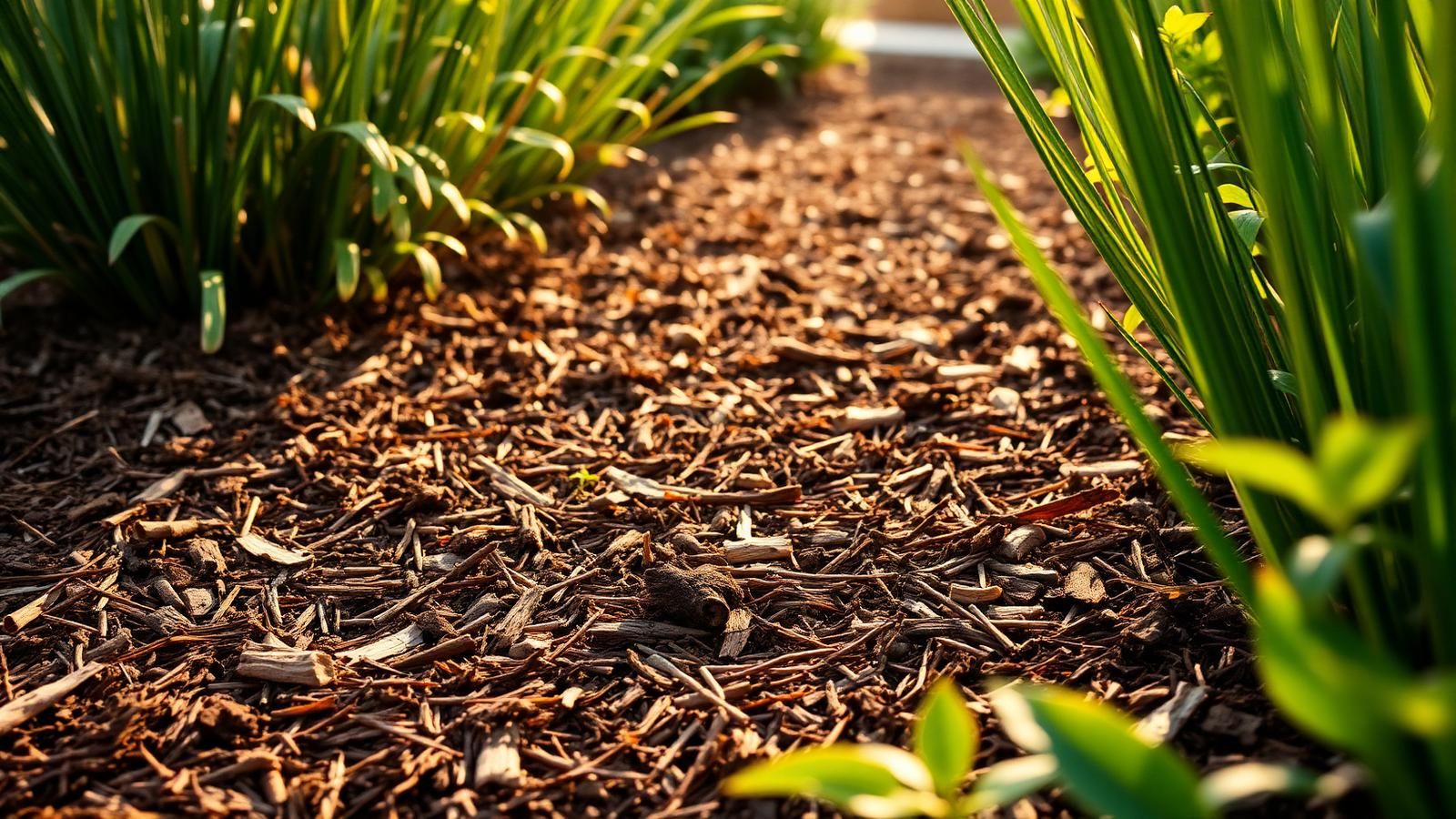
Once the plant is in, cover the soil. A 5 to 8 centimetre layer of mulch around the plant cuts evaporation, keeps the roots cooler at the height of summer and suppresses the weeds that would compete for water. In an Ibiza summer, bare soil and mulched soil dry out at completely different rates.
- Pine bark or pine needles: for planting beds and borders. They break down slowly and improve the soil over the years.
- Gravel: for spots exposed to the wind or close to the sea. It neither blows away nor rots, and it is what works best with agaves, rosemary and mastic.
- Always leave a fist's width between the mulch and the trunk so the collar does not stay damp.
Step 5: when to plant in Ibiza and how to water the first year
In Ibiza the planting season runs from October to March, and autumn, right after the first rains, is ideal. A plant put in the ground in November reaches August with its roots established. One planted in May reaches that same August with its roots half formed and needs twice the watering to survive. Picking the right date is the cheapest step of all.
- Settling-in watering: when planting, fill the basin twice in a row so the soil settles around the root ball without air pockets.
- Deep, spaced watering: from then on, one thorough watering a week beats a little every day. That way the roots grow downward in search of water instead of staying at the surface.
- The first summer: it is the only one that needs support. A drip line on a timer, like the Rain Bird systems we install, does that job without you having to think about it.
Staking against the easterly wind
If you are planting a tree, stake it for the first year, but keep the stake low and the tie loose so the trunk can move a little. A trunk that moves thickens and grows strong. One tied rigidly snaps the day you remove the stake. In the best plants for gardens in Ibiza you will find the species that respond best to this treatment.
Mistakes we see every autumn
- Planting in May or June because that is when the mood strikes, and reaching August with no root system.
- Filling the hole with bagged compost and watering daily: the exact combination that rots roots.
- Narrow, deep holes drilled with an auger in clay, with smooth walls the roots cannot cross.
- Burying the collar of the plant when backfilling.
- Leaving the soil bare all summer.
- Tying the tree to the stake with wire or rigid tape.
Soil preparation with professionals in Ibiza
Preparing the ground properly is what makes a planting work on half the water and without replacements every spring. At ServiJuanito we take care of garden design, soil preparation, the irrigation system and ongoing maintenance for villas, hotels and residential communities across the island.
Frequently asked questions
When is the best time to plant in Ibiza?
From October to March. Autumn, after the first rains, is ideal: the roots get the whole winter and spring to establish before the first summer, which is the real test.
Do I need to replace the garden soil before planting?
No. Except in a hole that does not drain, your own soil mixed with 20 to 30 per cent compost and, where there is clay, some gravel is better than any bagged substrate. Replacing the soil creates the buried-pot effect.
Which mulch is better in Ibiza, gravel or bark?
It depends on the spot. Gravel works best in places exposed to wind or near the sea and with dry-soil plants; pine bark or pine needles are better in beds and planting areas, because they also improve the soil as they break down.
How long does a Mediterranean plant take to root?
With well-prepared soil and an autumn planting, a nursery plant is usually established by the first summer. Planted in spring in a badly made hole, it can take two years and need twice the watering in the meantime.